
Rural England · 2026
An alliance of rural parish councils for countryside and planning power
Declare a devolution revolutionfor parish councils.

Join the Rural ROAR. Choose Green, not Grey.Join our campaign to reform grey-belt policy and secure planning devolution for rural parish councils. Villages are not spaces between towns, and referendum-backed Neighbourhood Plans must be upheld if “power in every postcode” is going to be more than a cheap slogan—or one reserved exclusively for urban areas. Rural England will not be silenced.
Latest evidence · Buckinghamshire83%of the study area would be grey belt after the removal of Footnote 7
Latest · 8 September 2026
One footnote changed the map.
Buckinghamshire’s own assessment says the policy change would turn 83% of its study area grey, including 85% of land within the Chilterns National Landscape. Sevenoaks, Tonbridge & Malling, Guildford and Rugby show the same rural blind spot.
Read the latest national evidence →Immediate campaignSUSPEND
The immediate campaign
Suspend the flawed grey-belt test for villages.
Grey belt sounds like derelict or poor-quality land. It is not. Under the current National Planning Policy Framework, almost any Green Belt land can be labelled grey belt if it does not strongly perform three particular Green Belt purposes. The problem is that those purposes were written for towns—not villages.
Purpose A tests the sprawl of large built-up areas; the NPPF expressly says villages do not count. Purpose B tests whether towns—not villages—might merge. Purpose D protects the setting and character of historic towns, but again not historic villages. Purpose C—safeguarding the countryside from encroachment—is not considered in the grey-belt definition at all.
The result is stark. AECOM’s Guildford Green Belt Assessment found that 551 of 575 areas—96%—did not strongly contribute to purposes A, B or D. That does not mean 96% of Guildford’s Green Belt is poor-quality land. It shows what happens when rural land is judged by tests that cannot see the villages it surrounds, the gaps between them or the countryside it protects.
In practice, the grey-belt label plainly changes the balance. Research published in October 2025 found that 16 of the first 20 major residential grey-belt appeals—schemes of ten homes or more—were allowed. The latest NPPF has since removed heritage, habitat, landscape and flood-risk protections from the grey-belt definition.
This is the rural blind spot: in the grey-belt test, the green fields around villages appear not to matter. That undermines the very purpose of keeping Green Belt land permanently open and creates an existential threat to villages everywhere. Rural ROAR therefore calls for the grey-belt test to be suspended for villages; reformed so villages are included in the tests for sprawl, merging and historic setting, with countryside encroachment made decisive; and backed by a parish power to call in applications that breach a made Neighbourhood Plan.
No allocation, release or permission should rely on a contested rural grey-belt finding while the policy and evidence are reviewed.
Include villages in the tests for sprawl, merging and historic setting, and make Purpose C—countryside encroachment—decisive alongside settlement boundaries, gaps, openness and permanence.
Allow a parish council to call in and decide a local application affecting its parish, excluding nationally significant infrastructure and projects of overriding national scale and benefit.
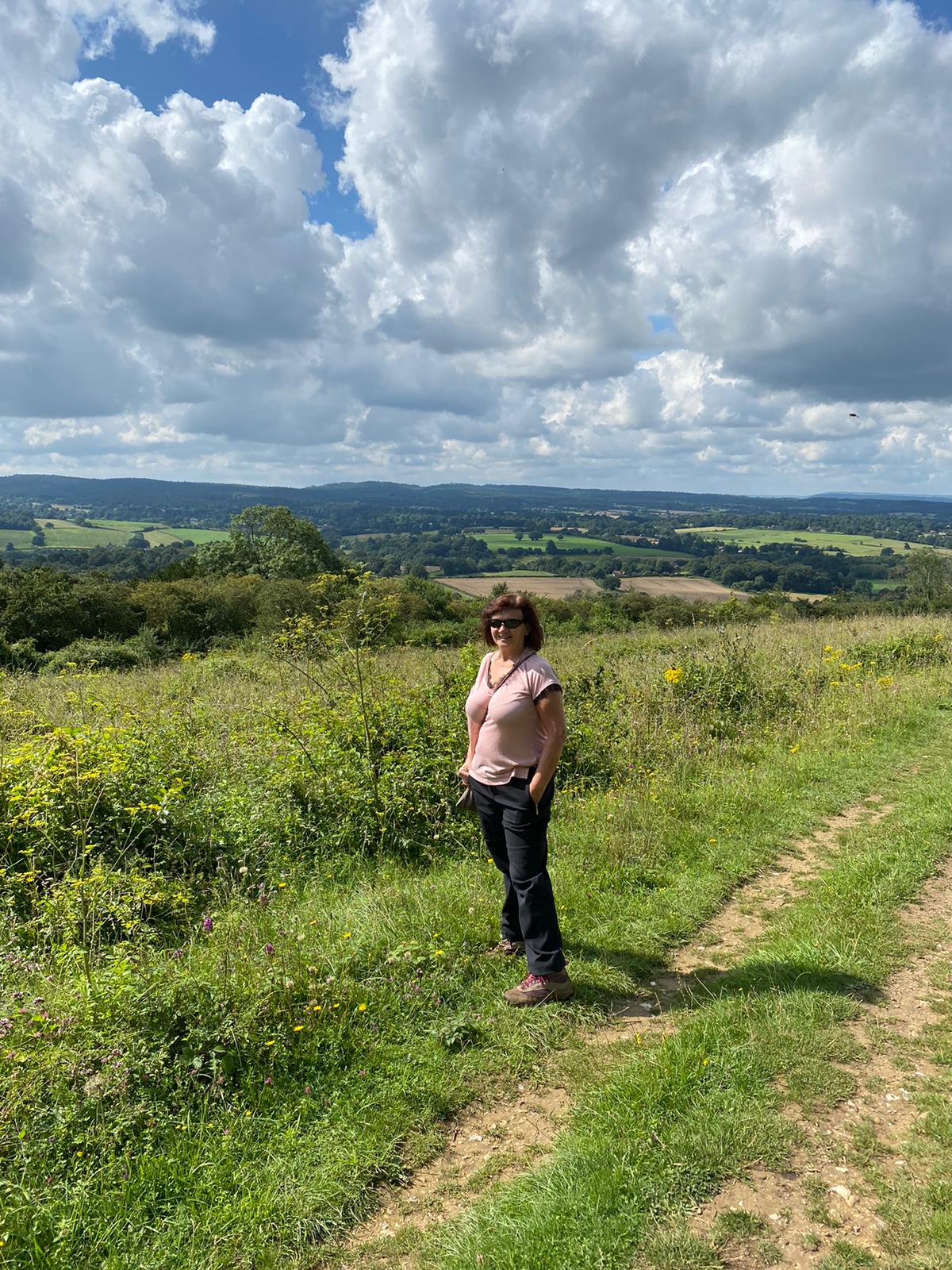
Meet the founder
The Surrey Scouser behind the ROAR.
From a brick back yard in Wavertree to the fields of rural Surrey, Paula Moss explains why protecting place—and trusting parish councils—became a personal campaign.
Read Paula’s story →Founding council · 26 August 2026
The first council has joined
Effingham Parish Council
has sounded the first ROAR.
EPC has formally adopted its resolution for grey-belt reform and planning devolution, nominated Vice Chair Paula Moss to represent it, and become the campaign’s founding council.
Join the campaign
Follow the ROAR. Carry it further.
Rural English villages united to suspend the grey-belt test for villages, uphold Neighbourhood Plans and win real planning power for parish councils.
01
The founding statement
Planning a Devolution Revolution for parish councils of Rural England
Declaration for
Planning Devolution
✦When decisions made in the name of the public cease to command the consent of the communities most affected by them, those communities have both a right and a duty to state plainly the principles by which they expect to be governed.
We, the Rural Parishes of England, call upon the Prime Minister to suspend immediately grey-belt assessment of applications affecting villages. The Guildford Borough Green Belt Assessment has shown that the current policy is not fit for rural purpose: it can label land around villages grey or provisionally grey without allowing the land’s role in safeguarding the countryside to determine the result. Unless corrected, that failure poses an existential threat to villages in the countryside—and to the countryside itself.
The future of our villages cannot justly be determined by housing arithmetic alone; local democracy must amount to more than the opportunity to comment; and land which sustains the setting, identity and separation of a village is not “grey” merely because a national formula disregards the land’s role in safeguarding the countryside.
We hold these principles to be self-evident:
- That homes are necessary, but location, design, affordability and infrastructure determine whether development builds a community or overwhelms one.
- That power should be exercised with consent, and the people who live with the permanent consequences of a planning decision must have a meaningful part in making it.
- That villages are not small towns in waiting, and open countryside is not unused land awaiting a developer.
- That a Neighbourhood Plan approved by referendum is a democratic promise given legal force, because it becomes part of the statutory development plan—not advice to be ignored when pressure rises.
- That the test must recognise villages, by including them in the tests for sprawl, merging and historic setting, and making Purpose C decisive because open land beyond a defined settlement boundary safeguards the countryside from encroachment.
- That local power must include the power to decide, allowing a qualifying parish council to call in, approve or refuse an application where it clearly conflicts with its made Neighbourhood Plan.
- That a democratic promise requires a democratic remedy: where a major application materially conflicts with that plan and more than 60% of local votes cast oppose it, the community must have a decisive veto.
- That growth must follow capacity, with transport, schools, healthcare, drainage and community facilities secured before new homes are occupied.
Our case
Successive reforms have promised localism while moving decisive power further from the parish. The language changes—targets, tilted balances, grey belt, strategic need—but the result is familiar: communities are told to absorb decisions they did not make, according to tests that do not describe the places in which they live.
01The grey-belt definition tests purposes A, B and D, while omitting Purpose C: safeguarding the countryside from encroachment.
02The detailed tests for A, B and D concern large built-up areas and towns—not villages—creating a structural rural blind spot.
03Open countryside beyond a defined village settlement boundary can therefore be recast as low-contribution land without testing the purpose it performs most directly.
04Made Neighbourhood Plans are praised as local democracy, then displaced when a developer proposes a different site or a wider authority falls behind its housing target.
05Rural communities are told to plan positively, identify housing sites and approve them by referendum, yet are denied the final say when an application conflicts with that work.
06Parish councils are statutory consultees but cannot call in and decide the applications that most directly reshape their communities.
07Infrastructure and developer contributions are negotiated around a parish, rather than agreed with the council that understands the local consequences.
08Development can impose severe effects across parish boundaries without giving neighbouring rural councils a formal, enforceable voice.
We therefore declare
That the Rural Alliance for Planning Change—and every rural parish council that joins it—are, and ought to be, full democratic partners in planning their own future. We claim no exemption from the law and declare no territorial secession. We declare instead that consultation without decision-making power is not consent—and call for power to be devolved.
We therefore claim the Rural ROAR: the right of a qualifying parish council to call in and decide a local planning application affecting its area where there is a clear conflict with a made Neighbourhood Plan. That power includes the right to approve development supported by the plan and the right to refuse or require change where the plan is broken. The exception is a nationally significant project shown through a statutory process to provide overriding national scale and benefit.
For qualifying proposals outside a defined village settlement boundary that extend built form or materially encroach into open countryside, the parish council must have a statutory veto. Where a qualifying application also conflicts with a made Neighbourhood Plan and more than 60% of valid votes cast reject it, that democratic result must bind the planning authority, inspectors and ministers.
We will work peacefully, lawfully and across party lines. We will assemble evidence, pass public resolutions, record local opinion and act together. We will support the homes our communities need in sustainable places and welcome proposals that deliver our plans. We will oppose the sacrifice of rural communities simply because they are politically easier to overrule.
And for the protection of the living, the inheritance of those who follow, and the integrity of the democratic process, we pledge to one another our voices, our evidence and our resolve. We will be passengers no longer. We will become masters of our own ship.
02
What the words mean
Devolution must reach the village
Challenge the law.
Reshape the law.
A parish cannot declare itself outside England’s planning system. Parish and town councils do not currently determine ordinary planning applications; the local planning authority does.
This campaign aims to challenge and reshape that law. A parish council with a made Neighbourhood Plan that includes site allocations and an approved process for deciding where development should go should have the final say on local applications affecting its area where there is a clear conflict with that plan.
This is a positive power as well as a safeguard. A parish council should be able to approve a good proposal supported by its plan, agree changes that make a scheme acceptable, or refuse a proposal that substitutes a developer’s choice for the community’s lawful plan.
Prime Minister Andy Burnham has promised to put “power in every postcode”. His Government has now announced proposals to extend planning call-in powers to elected mayors on the principle that local leaders with democratic mandates should be able to decide. Rural devolution should follow the same logic: parish councils need mayoral-style planning power at village scale. The call-in, countryside veto and binding ballot set out here are proposed reforms; they are not current law.
Prime Minister, I am lodging a request for KT24—my village of Effingham—to receive its share of that promised power. Rural England does not need a puffed-up mayor parading as a prince. Individuals are flawed; teamwork makes the dream work. We want parish councils—the elected bodies closest to their communities—to have the power to call in and decide planning applications.
We are the community. We have the legal plan. Let us be the ones to implement it. Or is our Andy all talk?
03
Planning power at parish scale
Power should beLOCALwhere the plan is localThe Rural ROAR
Not another comment.
A decision.
Where local people have approved a Neighbourhood Plan, identified housing sites and defined their settlement boundary, their parish council should have the power to deliver that plan—and defend it from proposals that clearly conflict with it.
A qualifying parish council may call in a local application affecting its area where it identifies a clear and material conflict with its made Neighbourhood Plan.
The parish considers the application in public and may approve plan-led development, require changes that secure compliance, or refuse the proposal on planning grounds.
Where qualifying development beyond the defined village boundary extends built form or materially encroaches into open countryside, the parish has a statutory veto, subject to the national-project exception.
“If mayors can call in planning decisions, rural parish councils should have power where their own lawful plan is at stake.”
Devolution must not stop at the city boundary
Power to say yes.
Power to say no.
- A qualifying plan: the parish must have a made Neighbourhood Plan with housing allocations or a clear, examined process for selecting sites.
- A clear conflict: call-in is triggered by a material planning conflict, not a trivial technical departure or personal objection.
- A positive route: plan-compliant development can be approved locally; an applicant may also amend a conflicting scheme and return.
- The 60% backstop: where more than 60% of valid votes in an independently administered local ballot oppose a qualifying plan-conflict application, refusal is binding.
- Proportionate scope: the countryside veto protects against material encroachment; routine householder works, agriculture and other defined minor proposals remain outside it.
- A narrow exception: nationally significant infrastructure and projects demonstrated to provide overriding national scale and benefit remain within the national regime.
04
The Rural Parish Blueprint
From one council motion to an alliance across rural England
Eight steps.
One Rural ROAR.
This method adapts the practical approach developed by Piddington’s Village That Roared: build the case, involve residents, use parish democracy and publish the result. A parish council can adopt this template, amend it to suit local circumstances or develop its own. The common ground is reform of the grey-belt test and real planning power for rural councils.
View the original Blueprints ↗01Choose your parish mandateUse the detailed model motion, the concise founding resolution—or write your own.+
- Put rural planning power and grey-belt reform on a properly convened parish-council agenda.
- Adopt the detailed model motion, adapt the concise founding resolution to local circumstances, or develop an equivalent declaration of your own.
- State the reforms your council supports, its decision on joining the Alliance and the person authorised to represent it.
- Adopt a short conduct code: lawful, factual, peaceful, transparent and non-party-political.
Required outputA public resolution stating the powers and policy changes your council supports.
02Audit the rural blind spotShow exactly how the current grey-belt test treats your village.+
- Map the defined settlement boundary, Green Belt parcels, made Neighbourhood Plan policies and allocated housing sites.
- Identify land outside the boundary where development would encroach into open countryside.
- Record which grey-belt purposes were tested, which village-based effects were excluded and where Purpose C would change the conclusion.
Required outputA parcel-by-parcel Grey-Belt and Purpose C audit with a clear map.
03Build the positive caseDemonstrate that countryside protection and housing delivery can work together.+
- List the sites and forms of development already supported through the Neighbourhood Plan or local plan.
- Set out housing need, infrastructure capacity, brownfield opportunities and the landscape functions of open countryside.
- Describe proposals the parish could support, subject to design, affordability and infrastructure.
Required outputA concise Rural Parish Case File that says yes as clearly as it says no.
04Consult the whole rural areaTest the case with residents and every neighbouring parish affected.+
- Publish the evidence before an open meeting and invite supporters, sceptics, younger residents and people needing housing.
- Send the case file to adjoining parish councils where traffic, landscape, services or settlement gaps may be affected.
- Record questions, correct errors and publish a balanced consultation report.
Required outputA transparent local and cross-boundary record of impacts and responses.
05Pass the Rural Roar motionMove the demand from campaign language into the democratic record.+
- Debate the motion in public and identify the exact grey-belt, call-in and Neighbourhood Plan reforms supported.
- Ask the council to vote on joining the alliance of rural parish councils.
- Publish the resolution, voting record, case file and named contact.
Required outputA minuted council mandate that can be counted nationally.
06Join the Alliance for Planning ChangeTurn separate parish resolutions into an England-wide reform mandate.+
- Submit the signed resolution, evidence summary and named council contact.
- Nominate one representative to the Rural Alliance for Planning Change.
- Share only verified facts and statements approved by the participating council.
Required outputA public register of rural councils and the reforms each has endorsed.
07Press the three reformsRequire ministers and planning authorities to answer a precise programme.+
- Suspend the grey-belt test as applied to villages and redraft it so villages are included in the tests for sprawl, merging and historic setting, with Purpose C decisive for countryside encroachment.
- Give qualifying parish councils power to call in and decide conflicting local applications, with a countryside veto beyond defined settlement boundaries.
- Protect referendum-backed Neighbourhood Plans for ten years and require parish agreement on local developer contributions.
Required outputA focused national demand that can be adopted across rural England.
08Use power positivelyMake the campaign a route to better development, not blanket refusal.+
- Support applications that deliver the Neighbourhood Plan, local housing need, good design and agreed infrastructure.
- Challenge policies and decisions—not individuals—and correct mistakes openly.
- Keep proposed powers distinct from current law until Parliament enacts them.
Required outputAn alliance whose judgment is as credible as its demand for power.
05
The reform programme
The Rural Parish Planning Charter
Eight powers worth
organising for.
Planning devolution needs a destination. These are the legislative and policy changes the alliance will ask Parliament, government and planning authorities across England to adopt. They turn the Government’s case for mayoral devolution into a rural principle: power should sit with the elected council closest to the consequences.
The right to plan
A made Neighbourhood Plan containing housing allocations cannot be replaced or displaced by a developer’s alternative proposal without the parish council’s agreement. With support at a local referendum, the parish may renew its plan’s full protection for up to ten years, provided it does not conflict with national policy or the strategic policies of the local plan.
The rural Green Belt test
The grey-belt method must include villages in the tests for sprawl, merging and historic setting, and treat safeguarding the countryside from encroachment as decisive. Contested findings should be suspended while the policy is redrafted and the land reassessed.
The parish call-in
A qualifying parish council may call in and decide a local planning application affecting its area where there is a clear conflict with its made Neighbourhood Plan. It may approve plan-led development as well as refuse conflict. Nationally significant projects of overriding scale and benefit are excluded.
The power to free local funds
Guildford Borough Council reported £5.88 million in infrastructure contributions received in earlier years but not allocated in its 2022–23 Infrastructure Funding Statement. Its published 2024–25 statement leaves the equivalent totals blank while communities desperately need local infrastructure. This campaign seeks parish power to nominate eligible projects, require a public allocation timetable and trigger the lawful release of Section 106 funds where the agreement’s purpose and legal tests are met.
The neighbouring parish voice
A parish materially affected by traffic, landscape, infrastructure or settlement impacts from development in a neighbouring area must be formally consulted, given the evidence and receive a reasoned response before determination.
The 60% Rural Veto
Where a qualifying application materially conflicts with a made Neighbourhood Plan and more than 60% of valid votes cast in a properly administered local ballot oppose it, permission must be refused.
The countryside veto
For qualifying development beyond a defined village settlement boundary that would extend built form or materially encroach into open countryside, the parish council will have a statutory right of veto unless the proposal is a nationally significant project of overriding scale and benefit.
Infrastructure first
Necessary transport, school, health, drainage and utility capacity will be funded, contracted and programmed before occupation, with housing directed first to allocated sites and sustainable places.
06
Put it on the agenda
One adopted example, one detailed model—or make your own
Choose your route.
Make it local.
There is no compulsory wording. A council can adopt the detailed model motion, adapt EPC’s founding resolution below, or write a declaration of its own. What matters is a clear, minuted decision stating the grey-belt and parish-power reforms the council supports and whether it is joining the Rural Alliance for Planning Change.
01
Detailed model motion
Use the full ten-point reform programme when the council wants every campaign commitment recorded.
Go to the detailed motion ↓02Adopted founding resolution
Use EPC’s real, minuted resolution as a practical starting point for your own council.
Go to EPC’s resolution ↓03Your own declaration
Write locally appropriate wording, provided the council states plainly what it is resolving to support.
Go to the guidance ↓The founding example
Effingham Parish Council’s adopted resolution
EPC adopted this self-contained resolution on 26 August 2026. It stands in the minutes without requiring the whole campaign charter to be attached and makes EPC the first council to join.
EPC’s resolution is reproduced exactly as adopted. It uses the campaign’s earlier working name; the current public name is Rural Alliance for Planning Change. The campaign’s current reform demand also expressly includes villages in the tests for sprawl, merging and historic setting, with countryside encroachment decisive.
Other councils are welcome to replace the council name, adjust the local detail or use it as the starting point for their own declaration.
Adopted EPC founding resolution · 26 August 2026
Effingham joins as the founding council.
Effingham Parish Council resolves:
- to become a founding member of the Rural Parishes Planning Campaign and to work with rural parish and town councils across England in support of countryside protection, plan-led development and meaningful discussion on planning devolution;
- to support the immediate campaign calling upon the Secretary of State to suspend reliance on contested grey-belt findings affecting open countryside around villages with a made Neighbourhood Plan and a settlement boundary established through the local-plan process, pending redrafting of the policy and reassessment of the affected land;
- to call for the grey-belt definition and assessment method to be reformed so that, for proposals affecting such villages, Purpose C—safeguarding the countryside from encroachment—is a decisive test, supported by proper evidence concerning village setting, settlement gaps, openness and permanence, and that purposes B and D be amended to include villages;
- to support legislation creating a statutory parish call-in power, enabling a qualifying parish council that chooses to do so, to call in and decide a local planning application affecting its area where there is a clear and material conflict with its made Neighbourhood Plan;
- that this proposed power should allow a parish council that has formally adopted such powers to approve development supported by the Neighbourhood Plan, require changes necessary to secure compliance with it, or refuse a proposal that materially conflicts with it;
- that nationally significant infrastructure and projects demonstrated through a statutory process to provide overriding national-scale benefit should remain within the appropriate national decision-making regime; and
- to nominate Vice Chair Paula Moss to represent Effingham Parish Council within the Rural Alliance for Planning Change and to report material campaign developments to the Council.
For the avoidance of doubt, this resolution establishes EPC’s policy and campaigning position for change. It does not predetermine the Council’s response to any current or future planning application. Every application will continue to be considered individually, on its planning merits and in accordance with the law and applicable planning policy. Neither does it assume that every parish council will choose to adopt any new powers, which will be subject to future agreement and adoption protocols.
Adopted by Effingham Parish Council on 26 August 2026.
This is EPC’s own founding declaration and is confined to the commitments expressly stated within it.
The detailed route
The full Rural Parish Planning Power motion
Use this version when the council wants to record the complete reform programme, including the Purpose C test, Neighbourhood Plan protection, the rural veto and local infrastructure funds.
Model motion · Version 4
Rural Parish Planning Power
That [NAME OF COUNCIL]:
- affirms its support for well-designed homes, including genuinely affordable homes, in sustainable locations with the infrastructure required to support them;
- endorses the Declaration and the eight powers in the Rural Parish Planning Charter, and agrees to join an alliance of rural parish and town councils for countryside protection and planning reform;
- calls on the Secretary of State to suspend immediately the grey-belt test as applied to villages, including reliance on contested identifications affecting open countryside around villages with a made Neighbourhood Plan and a settlement boundary defined through the local-plan process, pending policy redrafting and reassessment;
- calls for the grey-belt test to include villages in the tests for sprawl, merging and historic setting, and make Purpose C—safeguarding the countryside from encroachment—decisive, supported by granular evidence on setting, gaps, openness and permanence;
- calls on Parliament to give a qualifying parish council power to call in and decide a local application where there is a clear and material conflict with its made Neighbourhood Plan, including power to approve, require changes or refuse, excluding nationally significant infrastructure and projects of overriding national scale and benefit;
- calls for a statutory parish-council veto where qualifying development beyond a defined village settlement boundary would extend built form or materially encroach into open countryside, subject to the national-project exception and excluding routine householder works, agriculture and other defined minor proposals;
- calls for a made Neighbourhood Plan containing housing allocations not to be displaced by a developer’s alternative proposal without parish agreement, and for its full protection to be renewable for up to ten years by local referendum where it remains consistent with national policy and the strategic local plan;
- calls for a statutory Rural Veto where a qualifying plan-conflict application is opposed by more than 60% of valid votes in a properly administered local ballot;
- asks the local planning authority, pending reform, to record relevant grey-belt findings as contested; publish a parish-by-parish schedule of unallocated and unspent Section 106 receipts; agree eligible local priorities and a delivery timetable with this Council, within the purpose of each agreement and the applicable legal tests; and consult neighbouring parishes materially affected by a proposal; and
- resolves to prepare a Rural Parish Case File and Purpose C audit, send this resolution to the area’s MP, planning authority and Secretary of State, and appoint [NAME/ROLE] to represent the Council in the Rural Alliance for Planning Change.
For the avoidance of doubt, this resolution does not predetermine the Council’s response to any planning application. Every application will continue to be considered on its individual planning merits.
Agenda and record
Link to the campaign. Resolve the commitment.
Send the chosen wording to the parish clerk and ask what notice and procedure the council’s standing orders require. The agenda report may link to ruralroar.org.uk for background, but the resolution entered in the minutes should state the commitments being made.
After adoption, email the signed resolution, approved minutes or official council link to the Alliance. We will acknowledge it, verify it and add the council to the public campaign record.
Send us your adopted resolution →Important
These are proposed national reforms, not powers parish councils hold today. The council should take its own advice and preserve its ability to consider each current application on its planning merits.
07
How it began · The Surrey tradition
1649St George’s Hill
and Little Heath
 1649
1649and Little Heath
The Rural Roar has
deep Surrey roots.
The Levellers emerged during the English Civil War to demand representation, equality before the law and government answerable to ordinary people. Their arguments made a radical claim: political authority requires the consent of those expected to live under it.
In 1649, on St George’s Hill near Cobham and later at Little Heath, the Surrey Diggers called themselves the True Levellers and put that democratic instinct into action. They challenged remote power, demanded justice and insisted that land, freedom and representation could not be reserved for a privileged few.
This campaign does not claim their programme as modern planning policy. It carries forward their central challenge: when power is exercised over a place, the people of that place must have a real voice in the decision. Rural parish councils can begin that argument again in Surrey—and take it across England.
From St George’s Hill to rural England today: authority must answer to the people.
The opening campaign
Three phases.
One Rural ROAR.
Organise
Form an alliance of parish councils, unite behind the campaign and sound the Rural ROAR.
Demand reform
Demand reform of grey-belt policy and the immediate suspension of the grey-belt test as applied to villages.
Launch a devolution revolution
Draw power into rural postcodes.
Legal footing
Under current law, ordinary planning decisions remain with the local planning authority. A made Neighbourhood Plan forms part of the statutory development plan, but may still be outweighed by material considerations. The August 2026 NPPF defines grey belt through Green Belt purposes A, B and D; Annex E says those tests concern large built-up areas and towns, not villages. Purpose C is one of the five Green Belt purposes but is not part of the grey-belt identification test. The parish call-in, parish countryside veto, ten-year referendum renewal and binding 60% ballot on this site all require changes to national policy or legislation.